Rosa (Decorativa / Memorial)
Entre las imágenes más tatuadas en el mundo; sola, sin inferencia pandillera a pesar de aparecer en combinaciones de la guía TdA.
Solo con fines educativos — no es asesoría legal. Las imágenes son ilustraciones de referencia estilizadas, no fotografías de personas identificables. El significado de un tatuaje depende del contexto, ubicación, historial personal y la discreción consular bajo 9 FAM 302.5 y el Manual de Políticas de USCIS. Un solo tatuaje rara vez determina el resultado migratorio, pero los oficiales de USCIS, los oficiales consulares y los agentes de ICE pueden interpretar ciertas marcas como evidencia de afiliación pandillera, incluso durante entrevistas de ajuste de estatus, entrevistas de naturalización, entrevistas de asilo y exámenes de miedo creíble y miedo razonable. Si tiene alguno de estos tatuajes y enfrenta una entrevista con USCIS, una entrevista de visa, proceso de deportación o detención, consulte con un abogado de inmigración antes de cualquier interacción gubernamental.
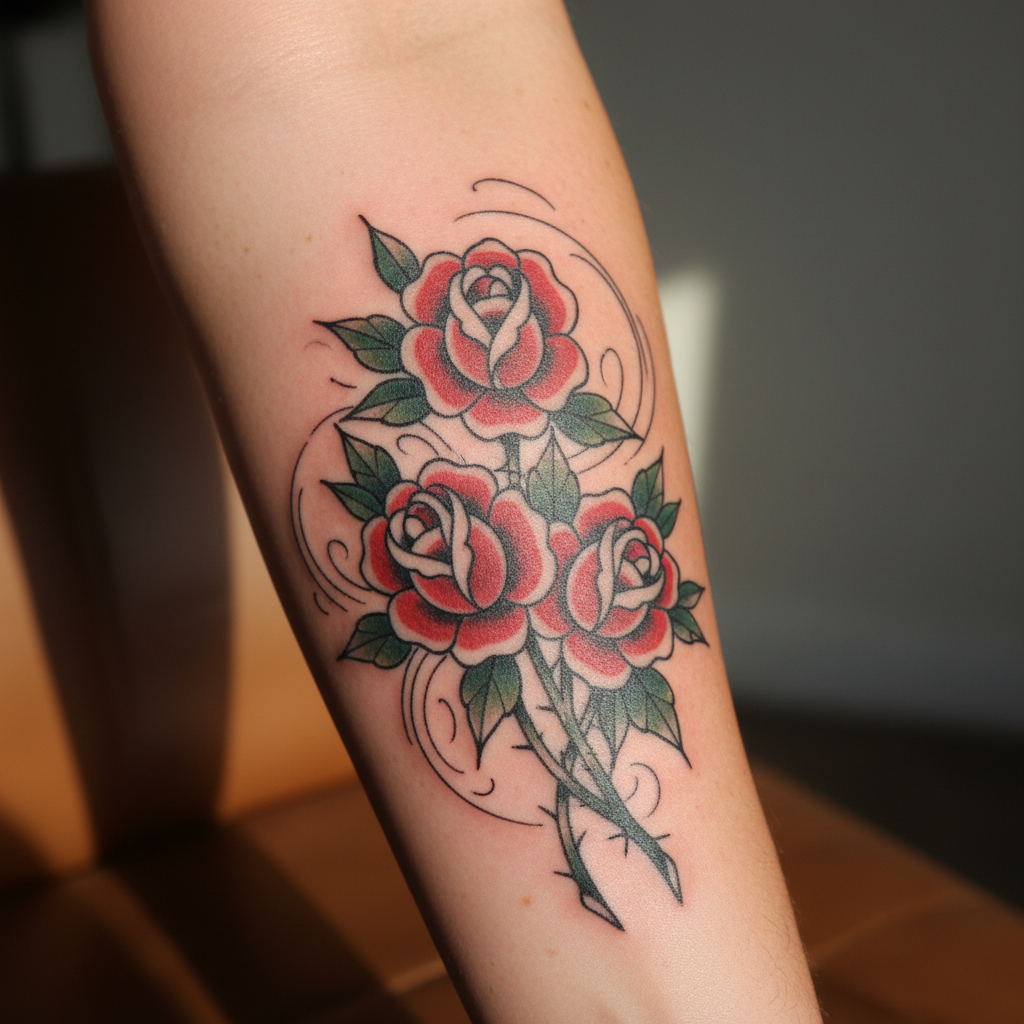
Qué representa este símbolo
A realistic or traditional-flash rose, single or in clusters, sometimes with thorns, names, or memorial dates. Among the most-tattooed images globally.
Qué pueden inferir los oficiales
Roses appear on the leaked CBP Tren de Aragua field guide as a TdA-associated motif, particularly when paired with clocks. Standing alone, the rose is one of the most universal decorative tattoos in the world and rarely gang-affiliative.
Contexto atenuante
Roses commemorate births, deaths, anniversaries, and beloved family members. They are among the top-five most-tattooed images globally. Standing alone — without 'TdA' lettering, crowns, or clocks in the same composition — they carry no gang inference.
Dónde se observa
Background
A realistic or traditional-flash rose, single or in clusters, sometimes with thorns, names, or memorial dates. Among the most-tattooed images globally. This imagery is widely worn for religious, cultural, heritage, professional, or purely aesthetic reasons. The risk is not that the tattoo is a gang marker — it isn't — but that an officer trained on a broad gang-tattoo field guide may flag it anyway, and the burden of explanation will fall on the wearer.
How U.S. officers typically read this tattoo
Roses appear on the leaked CBP Tren de Aragua field guide as a TdA-associated motif, particularly when paired with clocks. Standing alone, the rose is one of the most universal decorative tattoos in the world and rarely gang-affiliative.
Why context still matters
Roses commemorate births, deaths, anniversaries, and beloved family members. They are among the top-five most-tattooed images globally. Standing alone — without 'TdA' lettering, crowns, or clocks in the same composition — they carry no gang inference.
Why a denial based on a tattoo is so hard to challenge
In Department of State v. Muñoz, 601 U.S. 751 (2024), the Supreme Court reaffirmed the doctrine of consular non-reviewability: when a consular officer denies a visa under 9 FAM 302.5 — including a denial driven by how the officer reads a tattoo — the decision is largely unreviewable in U.S. court, even when a U.S.-citizen spouse is affected. That is precisely why getting the documentation in front of the officer before the interview matters more than challenging a denial after.
What documentation typically helps
- Photographs of the tattoo with metadata or social-media posts predating any alleged gang involvement
- Receipts, invoices, or a sworn statement from the tattoo artist
- Sworn declarations from family, employers, teachers, or clergy describing context
- Country-conditions evidence or expert testimony about the cultural, religious, or musical reference
- Records of any cover-up or laser-removal procedures
- Criminal-record checks (or absence thereof) from every country of residence
Before any interview, port-of-entry encounter, or ICE contact
Speak with an experienced immigration attorney before the encounter, not after. Once a consular officer enters a 9 FAM 302.5 denial or DHS records a gang-affiliation finding, the procedural posture is dramatically harder. Bring documentation in hand; do not rely on being able to "explain it later."
Preguntas frecuentes
¿Tener este tatuaje me negará automáticamente la visa o iniciará deportación?
No. Bajo 9 FAM 302.5, los oficiales consulares consideran tatuajes como un factor entre muchos. La deportabilidad bajo INA §237(a)(2)(F) requiere evidencia de actividad pandillera real, no apariencia. Sin embargo, la carga de explicación recae sobre usted — y después de Department of State v. Muñoz, 601 U.S. 751 (2024), una negación consular es prácticamente inapelable.
¿Debería cubrir o quitarme el tatuaje antes de la entrevista?
Ocultarlo puede ser contraproducente si lo descubren. La mayoría de los abogados aconsejan documentar el origen (año, lugar, recibo del tatuador, fotos previas a cualquier supuesta membresía pandillera) y prepararse para explicarlo. Consulte con un abogado de inmigración antes de cualquier decisión.
¿Qué evidencia ayuda a refutar un hallazgo de afiliación pandillera?
Declaraciones juradas de familia, empleadores y maestros; calificaciones escolares y registros de empleo; fotografías y publicaciones fechadas; registros del tatuador; cartas de clero cuando hay significado religioso; y reportes de condiciones del país sobre el significado cultural o religioso. Mientras antes la recopile, más fuerte su caso.
Si el oficial consular niega mi visa por el tatuaje, ¿puedo apelar?
Casi seguro que no en los tribunales. En Department of State v. Muñoz, 601 U.S. 751 (2024), la Corte Suprema reafirmó que las negaciones consulares son prácticamente inapelables, incluso cuando un cónyuge ciudadano estadounidense se ve afectado. La preparación antes de la entrevista es mucho más valiosa que apelar una negación después.