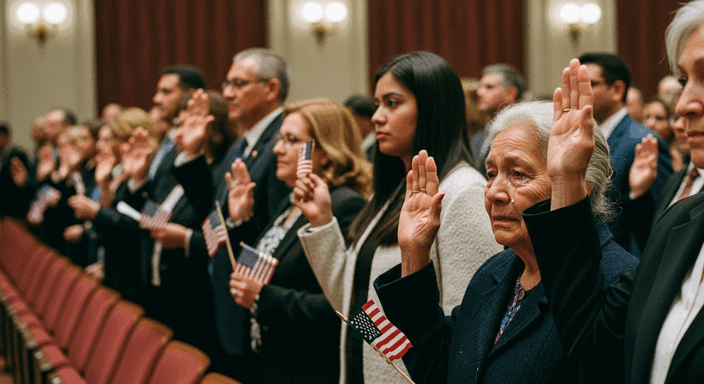
Naturalization & Citizenship
From Form N-400 to the oath ceremony — citizenship for permanent residents, plus derivation and acquisition claims.
The five statutory pillars of naturalization
INA § 316(a) requires every N-400 applicant to prove:
- Lawful permanent resident status for the qualifying period (five years, or three under INA § 319(a) for spouses of citizens).
- Continuous residence in the United States — broken by any single absence of six months or more, presumptively broken by absences of one year or more.
- Physical presence for at least half of the qualifying period.
- Good moral character for the entire statutory period (and, in practice, beyond).
- English and civics knowledge — with limited age and disability exemptions under INA § 312(b).
The trap most applicants don't see
Filing an N-400 is also an invitation to USCIS to re-examine your underlying green card. If the original adjustment or consular case had a problem — an old fraud, an undisclosed arrest, a marriage that ended early, a public-charge issue — the agency can deny naturalization and place you in removal proceedings under INA § 318. This is not theoretical: in 2026, denaturalization referrals are at a 25-year high.
A sound N-400 strategy starts by re-running the admissibility analysis under INA § 212 as if the client were applying for the green card today, including:
- Every arrest, citation, deferred adjudication, or expungement (the categorical approach matters)
- Every prior immigration application and the answers given on each
- Tax filing history and any failure to file as a worldwide-income resident
- Selective Service registration for males who lived here between 18 and 26
- Any travel exceeding 180 days as a green-card holder
If any of those raise a flag, we fix it before USCIS sees the file.
You may already be a U.S. citizen
Many clients are surprised to learn they are citizens by acquisition at birth (INA § 301) or by derivation through a parent's naturalization before age 18 (INA § 320). We routinely file Form N-600 Certificates of Citizenship for clients who never needed to naturalize at all.
Our N-400 service includes
- A pre-filing audit covering travel, criminal, tax, and selective-service issues
- Civics and English interview preparation in both English and Spanish
- Representation at the USCIS interview
- N-336 administrative review and federal-court § 1421(c) review when USCIS errs
- Same-day oath ceremony coordination
Attorney services
Have an attorney review your case
Start with a free consultation, or get direct attorney attention right away—instant written document review, a live mock interview on camera, or a live video call.
Document Review
Talk to an Attorney Live
Usually online weekdays 9–5 PT. Until then, here are two ways to get attorney attention without waiting:
Legal Citations
Keep reading
Related Resources
Will an old arrest or DUI block my naturalization?
Possibly — the statutory good-moral-character period is the 5 years (3 for spouses of citizens) before filing, but USCIS examines arrests beyond that window for context and a single conviction can be disqualifying.
I was born abroad — am I already a U.S. citizen and don't know it?
Possibly — INA § 301 (acquisition at birth) and INA § 320 (derivation through a parent) automatically confer citizenship in many cases, and you would apply for proof on Form N-600 rather than filing an N-400.
Will I lose my original citizenship if I naturalize as a U.S. citizen?
Not under U.S. law — the United States recognizes dual citizenship and does not require renunciation, but your country of origin may have its own rules that revoke citizenship upon naturalization elsewhere.